

Green Card Renewal Versus Replacement: Understanding the Difference in Virginia
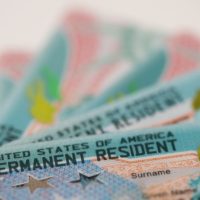
A green card provides lawful permanent residents with important documentation of their right to live and work in the United States. For immigrants who have established homes, careers, and families in Virginia, keeping that documentation current is an important responsibility. However, when a green card expires, becomes damaged, or goes missing, determining which application to file can be confusing, especially because the federal government uses the same form for both renewal and replacement.
Although green card renewal and replacement often involve similar procedures, they address different circumstances. The distinction affects when an application should be filed, what supporting evidence is required, and how an individual can demonstrate permanent resident status while waiting for a new card. A Virginia green card lawyer can help avoid filing errors, and address complications involving expired, missing, or incorrect immigration documents.
What Is the Difference Between Green Card Renewal and Replacement?
The primary difference between green card renewal and replacement is the reason an individual needs a new Permanent Resident Card, formally known as Form I-551.
Green card renewal generally applies when a lawful permanent resident’s ten-year card has expired or is approaching its expiration date. The renewal process provides an updated card that continues serving as evidence of the individual’s existing permanent resident status.
Green card replacement applies when an individual needs a new card for another reason, such as loss, theft, physical damage, or a legal name change. Replacement may also be necessary when USCIS issued a card containing incorrect information or when a previously issued card was never received.
Both processes are generally handled through Form I-90, Application to Replace Permanent Resident Card. The application is governed by federal regulations, including 8 C.F.R. § 264.5, which identifies circumstances requiring permanent residents to obtain new cards.
Although the same application is used, selecting the correct filing reason is essential because USCIS requires different documentation for different situations.
When Should a Virginia Resident Renew a Green Card?
Most lawful permanent residents receive green cards that remain valid for ten years. USCIS generally recommends filing for renewal when the card is within six months of expiration.
For example, a permanent resident living in Annandale whose green card expires in October may begin the renewal process in April of that year. Filing within the recommended period allows the resident to request an updated card before the existing document expires.
USCIS also accepts renewal applications from qualifying permanent residents whose ten-year cards have already expired. However, filing substantially earlier than the six-month renewal window may result in denial because the application does not satisfy the applicable filing requirements.
Renewing a green card does not require the individual to establish eligibility for permanent residence all over again. The application concerns continued documentation of an existing immigration status rather than a new request to become a permanent resident.
Nevertheless, USCIS may review identifying information, immigration records, and other relevant matters while processing Form I-90.
Does an Expired Green Card Mean You Have Lost Permanent Resident Status?
An expired ten-year green card does not automatically terminate lawful permanent resident status. The expiration date generally applies to the physical card rather than the underlying immigration status.
For example, a permanent resident who has lived in Alexandria for fifteen years does not automatically become undocumented simply because their green card expired last month. Assuming their lawful permanent resident status has not otherwise ended, they remain a permanent resident even though their identification document needs renewal.
An expired card can still create practical difficulties. A resident may need current evidence of immigration status for international travel, certain employment documentation procedures, or interactions with government agencies.
Federal law also imposes a documentation requirement. Under INA § 264(e), codified at 8 U.S.C. § 1304(e), noncitizens who are at least eighteen years old generally must carry their issued alien registration documentation.
Keeping a valid green card or acceptable temporary evidence of status helps residents meet documentation requirements and avoid unnecessary complications.
When Is Green Card Replacement Necessary?
Green card replacement addresses situations in which the existing document can no longer reliably serve its intended purpose or contains information that needs updating.
A permanent resident whose wallet is stolen while traveling through Arlington may need to replace a missing green card even though the original card would not expire for several more years. Similarly, a resident whose card is physically damaged may need a replacement if the document is no longer suitable for identification or verification purposes.
Replacement is also appropriate when a person’s legal name changes after marriage, divorce, or a court order. USCIS requires supporting documentation establishing the change, such as a marriage certificate, divorce decree, or court order.
Another situation involves incorrect information printed on a green card. An error in the individual’s name, date of birth, or other identifying information may require correction through Form I-90.
The cause of the error matters. When incorrect information resulted from a Department of Homeland Security mistake, the applicant may qualify for a fee exemption. USCIS generally requires the applicant to submit the original incorrect card and evidence establishing the correct information.
Replacement may also be necessary when USCIS issued a card that never reached the intended recipient. The applicable filing procedures and fees depend partly on whether the card was returned to USCIS as undeliverable.
Permanent residents who obtained their cards before turning fourteen may have additional replacement or registration obligations upon reaching that age. These requirements are distinct from the ordinary ten-year renewal process.
How Do You Apply for Green Card Renewal or Replacement in Virginia?
Lawful permanent residents generally request renewal or replacement by filing Form I-90 with U.S. Citizenship and Immigration Services. Depending on the circumstances, the application may be submitted online through a USCIS account or by mail using the current paper form.
The application requires identifying information, including the applicant’s name, address, date of birth, and Alien Registration Number. Applicants must also identify their immigration status and select the specific reason they are requesting a new card.
Supporting evidence depends on that reason. Someone renewing an expiring card generally submits a copy of the existing card, while someone replacing a lost card may provide a copy of the missing card or acceptable government-issued identification. Applicants requesting changes to their biographical information may need additional legal documents.
After accepting the application, USCIS issues a receipt notice. Depending on the circumstances, the agency may schedule a biometrics appointment to collect fingerprints, photographs, or other information needed for identity verification and background checks.
Once the application is approved, USCIS generally mails the new green card to the applicant’s designated U.S. mailing address.
How Much Does Green Card Renewal or Replacement Cost?
USCIS generally charges filing fees for Form I-90. Under the agency’s published fee schedule, the standard filing fee is $415 for online applications and $465 for paper applications.
However, not every applicant must pay the standard fee. Certain replacement requests may qualify for a fee exemption, particularly when USCIS issued a card with incorrect information because of a government error.
Some applicants whose cards were issued but never received may also qualify for fee-free replacement when the applicable USCIS requirements are satisfied. In addition, certain individuals may qualify for a fee waiver based on their financial circumstances.
Applicants should verify the current fee schedule before filing because USCIS fees and eligibility requirements can change. Submitting an incorrect payment may result in rejection of the application.
Can You Prove Permanent Resident Status While Waiting for a New Green Card?
Many Virginia residents cannot put employment responsibilities, family obligations, or travel plans on hold while USCIS processes their applications. Fortunately, temporary evidence of permanent residence may be available.
For qualifying applicants who properly file Form I-90 to renew an expiring or expired ten-year green card, USCIS currently provides a 36-month automatic extension of the card’s validity.
The extension is documented through the Form I-90 receipt notice. The notice, when presented together with the expired green card, serves as evidence of continued permanent resident status for 36 months beyond the expiration date printed on the card.
This distinction matters because the extension notice generally must be presented with the expired physical card. A resident whose card was lost or stolen cannot simply use the same combination of documents.
What If Your Green Card Was Lost or Stolen?
A permanent resident who no longer possesses their card may request temporary evidence of status through an Alien Documentation, Identification, and Telecommunications (ADIT) stamp, also known as a temporary I-551 stamp.
USCIS may provide this documentation after the individual files Form I-90 and requests temporary evidence through the USCIS Contact Center. Depending on the circumstances, USCIS may issue the temporary evidence by mail or require an appointment at a field office.
The ADIT stamp can provide important documentation of lawful permanent residence while the replacement application remains pending. USCIS determines the appropriate validity period and method of issuance.
For someone who has lost a green card shortly before an important trip or needs to document immigration status for another purpose, obtaining temporary evidence may be particularly important.
Are the Rules Different for Conditional Green Card Holders?
Yes. Conditional permanent residents must follow different procedures when their two-year cards approach expiration.
Conditional green cards are commonly issued to certain individuals who obtain permanent residence through marriage or qualifying investment-based immigration. Unlike ordinary ten-year cards, these documents reflect an immigration status subject to specific conditions.
A conditional permanent resident generally cannot renew an expiring two-year card by filing Form I-90.
Instead, a marriage-based conditional resident generally must file Form I-751, Petition to Remove Conditions on Residence, during the 90-day period immediately preceding the second anniversary of obtaining conditional residence. Certain applicants qualify for waivers of the joint-filing requirement, which have different filing considerations.
Conditional permanent residents who obtained status through qualifying investment-based immigration generally use Form I-829, Petition by Investor to Remove Conditions on Permanent Resident Status, under the applicable filing requirements.
When a qualifying petition to remove conditions is properly filed, USCIS issues a receipt notice documenting continued conditional permanent resident status while the petition remains pending. USCIS has provided a 48-month extension of card validity for qualifying Form I-751 and Form I-829 petitioners.
However, conditional residents may use Form I-90 in certain situations involving a card that is lost, damaged, or contains incorrect information, provided the card is not expired or within 90 days of expiration.
The distinction is especially important because filing Form I-90 instead of the required petition to remove conditions does not satisfy the legal obligation to seek removal of those conditions.
Can You Travel Internationally During Green Card Renewal or Replacement?
International travel requires careful consideration when a green card is expired, missing, or being replaced.
A qualifying permanent resident with an expired ten-year card and a valid Form I-90 renewal extension notice may generally use those documents together as evidence of continued permanent resident status. Travelers should still review applicable airline boarding requirements and carry any additional travel documents required for their destination.
The situation becomes more complicated when the physical green card is missing.
A permanent resident who loses their green card while outside the United States may need to request carrier documentation through Form I-131A, Application for Carrier Documentation, depending on their circumstances. This documentation can help establish eligibility to board transportation returning to the United States, but it does not guarantee admission.
An individual planning to travel from Virginia through Washington Dulles International Airport or another international airport should confirm that their immigration documents are sufficient before departure.
Renewal or replacement also does not eliminate the separate rules governing extended international absences. Even with a valid card, prolonged periods outside the United States can raise questions about abandonment of permanent residence.
How Long Does Green Card Renewal or Replacement Take?
Processing times depend on USCIS workload, application volume, the reason for filing, and whether additional review or biometrics are necessary.
Some applicants may receive their new cards relatively quickly, while others experience longer processing periods. USCIS publishes processing-time information that applicants can consult to understand current agency estimates.
An applicant can monitor the status of a pending Form I-90 through the USCIS online case status system using the receipt number assigned to the application.
Keeping contact information current is also essential. Under 8 U.S.C. § 1305, most noncitizens must report changes of address within ten days of moving, subject to certain exceptions. A permanent resident who relocates from Alexandria to Annandale, for example, should update their address with USCIS rather than assuming that a change submitted through the U.S. Postal Service will automatically reach the immigration agency.
An outdated address may result in missed appointment notices, delayed correspondence, or difficulties receiving the new green card.
Should You Renew Your Green Card If You Are Applying for Citizenship?
Permanent residents preparing to become U.S. citizens may wonder whether renewing an expiring green card is necessary when they already have a pending naturalization application.
USCIS provides a separate automatic extension of green card validity for qualifying applicants who properly file Form N-400, Application for Naturalization. The Form N-400 receipt notice generally extends the validity of the existing green card for 24 months beyond the printed expiration date when presented with the card.
As a result, some applicants with pending naturalization cases may not need to file Form I-90 solely because their ten-year green card has expired. However, a person whose physical card is missing, whose extension documentation has expired, or who has other documentation concerns may need additional assistance.
Naturalization and green card renewal are separate immigration processes. Applying for citizenship does not automatically resolve problems involving lost documents, prior immigration concerns, or the need for acceptable proof of permanent resident status.
Contact a Virginia Green Card Lawyer
Knowing whether to renew or replace a green card can help Virginia permanent residents avoid unnecessary expenses, documentation problems, and interruptions to important travel or personal plans. Although both procedures generally involve Form I-90, the correct filing approach depends on the condition of the card, the individual’s immigration classification, and the reason a new document is needed.
At Escobar Law Offices, immigration attorney Janet Escobar assists lawful permanent residents throughout Virginia, including Annandale, Alexandria, Arlington, and surrounding Northern Virginia communities near Washington, D.C. If your green card has expired, was lost or stolen, contains incorrect information, or needs replacement while another immigration application is pending, contact Escobar Law Offices for guidance on protecting your permanent resident documentation and addressing the applicable USCIS requirements.
Sources:
- 8 C.F.R. § 264.5, Application for a Replacement Permanent Resident Card. https://www.ecfr.gov/current/title-8/chapter-I/subchapter-B/part-264/section-264.5.
- S. Citizenship and Immigration Services, Instructions for Form I-90, Application to Replace Permanent Resident Card. https://www.uscis.gov/sites/default/files/document/forms/i-90instr.pdf.
- Immigration and Nationality Act § 264(e), 8 U.S.C. § 1304(e). https://uscode.house.gov/us/usc/t8/s1304/.
- S. Citizenship and Immigration Services, Form G-1055, Fee Schedule. https://www.uscis.gov/sites/default/files/document/forms/g-1055.pdf.
- S. Citizenship and Immigration Services, USCIS Extends Green Card Validity Extension to 36 Months for Green Card Renewals, September 18, 2024. https://content.govdelivery.com/accounts/USDHSCIS/bulletins/3b688d0.
- S. Citizenship and Immigration Services, USCIS Announces Additional Mail Delivery Process for Receiving ADIT Stamp, March 16, 2023. https://content.govdelivery.com/accounts/USDHSCIS/bulletins/34f27df.
- S. Citizenship and Immigration Services, Form I-751 and Form I-829. https://www.uscis.gov/i-751 and https://www.uscis.gov/i-829.
- S. Citizenship and Immigration Services, Instructions for Form I-131A, Application for Carrier Documentation. https://www.uscis.gov/sites/default/files/document/forms/i-131ainstr.pdf.
- S. Citizenship and Immigration Services, How to Change Your Address. https://www.uscis.gov/addresschange.
- S. Citizenship and Immigration Services, Policy Alert: Automatic Extension of Permanent Resident Cards for Naturalization Applicants, December 9, 2022. https://www.uscis.gov/sites/default/files/document/policy-manual-updates/20221209-ExtendingPRC.pdf.
 Nearly a Decade of Experience
 5-Star Reviews
 Thorough Investigation in Every Case
 Fighting for Every Client